

Quick answer
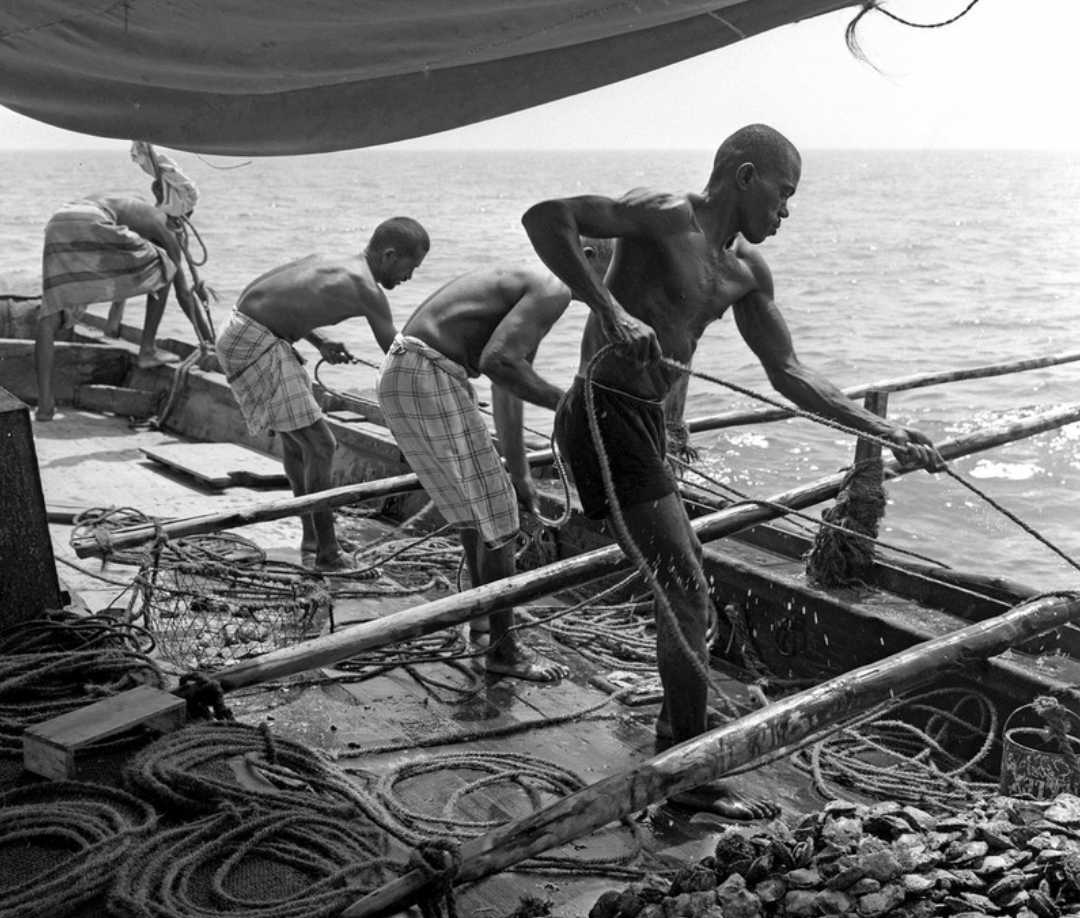
Pearl diving in the UAE was a seasonal industry that ran from late May through September, when warmer waters made diving conditions tolerable. Divers descended 12 to 40 meters without breathing equipment, relying on a nose clip, finger guards, and a weighted stone to reach the seabed. Each dive lasted 60 to 90 seconds. The trade employed entire coastal communities in roles from captain to rope puller, shell opener to merchant, creating an economic and social system that defined the Gulf for over 2,000 years.
Before the first oil wells opened in the 1960s, pearl diving was the economic foundation of the UAE's coastal settlements. The Arabian Gulf produced some of the finest natural pearls in the world, and Ras Al Khaimah was among the region's busiest ports during the annual diving season. The diving fleet operated from late May through September, when the waters warmed enough to make repeated dives survivable. A typical pearling dhow carried a crew of 15 to 20 men. The ghawwas, or diver, descended using a stone weight tied to a rope, holding his breath for up to 90 seconds while collecting oysters in a woven basket. A seib, or rope puller, remained on deck to haul the diver back to the surface. Captains navigated to traditional oyster beds using knowledge passed down through generations, identifying productive sites by water color, depth, and tidal patterns. Facts about pearl diving in the UAE demonstrate a maritime culture built on inherited environmental expertise and physical endurance. Divers wore minimal equipment: a leather finger guard to protect against sharp shells, a bone or wooden nose clip, and sometimes a weighted leather belt. No breathing apparatus existed. The most skilled divers could make 50 or more dives per day. Oysters were opened on deck each evening, and pearls were sorted by size, luster, and shape. Payment followed a complex share system in which divers, pullers, captains, and boat owners each received a portion of the season's profits after deducting costs for food, water, and equipment. The pearl trade collapsed in the 1930s when Japanese cultured pearls flooded the market and the Great Depression reduced demand. Within a decade, the industry that had sustained the Gulf for millennia virtually disappeared. Today, heritage sites in Ras Al Khaimah preserve the tools, vessels, and oral histories of the divers who worked these waters. Visitors can see restored pearling dhows, handling the stone weights and rope systems divers relied on, and learn the grading terms merchants used to value each pearl. The legacy persists in the region's maritime vocabulary, boat-building techniques, and the families who trace their lineage to pearling captains and divers.
“The most skilled divers could make 50 or more dives per day, each lasting 60 to 90 seconds at depths that would challenge modern freedivers.”
Opening Hours for Facts About Pearl Diving in the UAE
The pearl diving site in Al Rams operates on a consistent daily schedule to accommodate visitors. You may reach the site at +971 50 773 6086 for verification.
| Monday | 10:00–15:00 | |
|---|---|---|
| Tuesday | 10:00–15:00 | |
| Wednesday | 10:00–15:00 | |
| Thursday | 10:00–15:00 | |
| Friday | 10:00–15:00 | |
| Saturday | 10:00–15:00 | |
| Sunday | 10:00–15:00 |
Directions and Logistics for Facts About Pearl Diving in the UAE
The pearl diving site is located in Al Rams, a coastal area in the northern part of Ras Al Khaimah. The most efficient way to reach the location is by private vehicle or taxi, following the coastal routes that lead toward the Al Rams district.
Follow E11 or E18 north towards Al Rams
Direct service to Al Rams, Ras Al Khaimah
Cultural and Historical Facts About Pearl Diving in the UAE
The pearl industry served as the economic foundation of the United Arab Emirates for centuries before the discovery of oil. These historical practices shaped the coastal identity and maritime traditions of Ras Al Khaimah.
19th century peak
During the 19th and early 20th centuries, pearl diving provided the primary source of income for the majority of the population in the Trucial States. Global demand for Gulf pearls reached its height in the late 1800s.
Ghawwas and Al-Ghais roles
Divers, known as Ghawwas, relied on traditional methods without modern equipment, while the Al-Ghais was the master diver who led the crew. They worked long shifts at sea, often lasting several months, during the main pearling season known as Al-Oda.
The nose clip instrument
Divers traditionally used a nose clip made of turtle shell or wood, called a fatam, to prevent water from entering their nostrils while submerged. They also wore leather finger guards to protect their hands from sharp oyster shells.
System of ship credit
The pearling industry operated on a complex credit system where captains provided advances to divers, which created a cycle of seasonal labor and financial interdependence. This economic structure supported families across the coastal communities during the off-season.
The natural pearl method
Unlike modern cultured pearls, traditional diving focused exclusively on finding natural pearls formed by oysters in their wild habitat. It took thousands of oysters to yield a small collection of high-quality pearls for trade.
Pre-Visit Checklist for Facts About Pearl Diving in the UAE
Prepare these essentials before your pearl diving experience to ensure a comfortable and informed visit.
-
Book your spot in advance — Tours operate daily with limited capacity, so reserve through the official channels to secure your preferred date.
-
Bring sun protection and a hat — The coastal location offers minimal shade, and midday temperatures can be intense.
-
Wear comfortable closed-toe shoes — You'll be walking on uneven ground and potentially wading in shallow water during demonstrations.
-
Carry a refillable water bottle — Staying hydrated is essential during the outdoor portions of the tour.
-
Have your phone charged — You'll want to capture the traditional diving techniques and historic pearl farming equipment on display.
-
Arrive during the recommended window — Plan to reach the site between 10:00 and 14:00 to complete the full experience before closing at 15:00.
Check availability
Frequently Asked Questions About Pearl Diving in Ras Al Khaimah
Everything you need to know about facts about pearl diving in the uae