

Quick answer
Pearl diving anchored the UAE's economy for over 4,000 years, providing the primary income for coastal emirates until the early 20th century. The industry shaped maritime law, commercial networks across the Gulf and Indian Ocean, and social bonds between merchants, divers, and船长 captains. Its rituals, vocabulary, and collective memory remain central to Emirati identity, preserved through heritage sites, oral tradition, and contemporary pearl farms in Ras Al Khaimah that demonstrate centuries-old cultivation techniques.
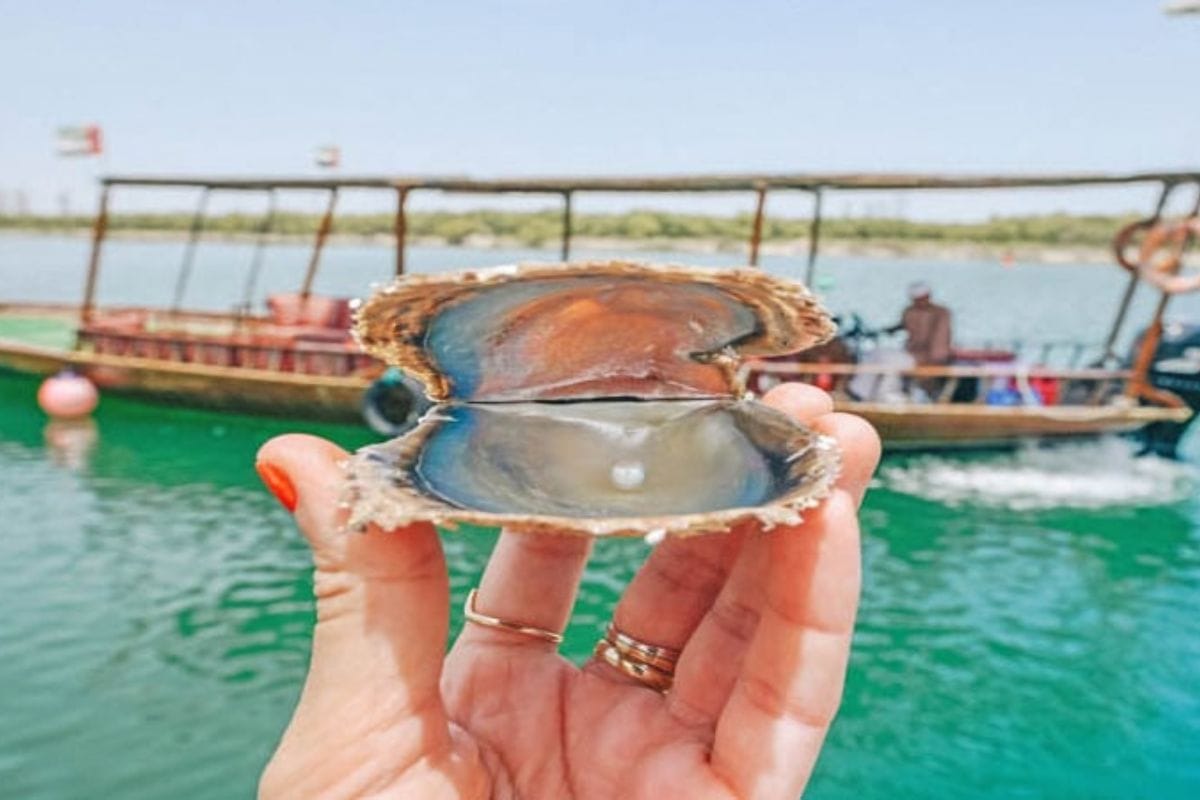
For more than four millennia, the shallow waters off the Arabian Gulf yielded pearls so lustrous they commanded premium prices in markets from Bombay to Paris. The pearling season ran from May through September, when fleets of dhows sailed from ports including what is now Ras Al Khaimah, carrying crews of divers who descended without breathing apparatus to depths of twelve fathoms. A single dive lasted two minutes; a working day comprised fifty or more descents. The physical toll was severe, yet entire coastal economies depended on the harvest. Why is pearl diving important in the uae extends beyond commerce into the architecture of society itself. Pearling created the merchant class that later diversified into trade and real estate, established credit systems that evolved into modern banking, and developed maritime law still referenced in Gulf jurisprudence. The hierarchies aboard a pearling dhow—nakhoda captain, seib diver, sayyab rope-puller—mirrored and reinforced social structure ashore. Songs sung during the work, called nahma, synchronized labor and preserved oral history; many are still performed at heritage festivals across the Emirates. The collapse came suddenly. Japanese cultured pearls flooded the market in the 1930s, and the global depression eliminated luxury demand. Within a decade, the industry that had sustained generations vanished. Divers turned to fishing, boat-building, or migration. Yet the cultural imprint endured. When the UAE formed in 1971, founding leaders drew explicitly on pearling heritage to articulate national values: patience, courage, interdependence, and respect for the sea. Ras Al Khaimah has emerged as a center for heritage pearl diving experiences. Suwaidi Pearls, located along Al Rams Road in the northern mangroves, operates as both a working pearl farm and an educational site. Visitors wade into the same tidal lagoons where natural oyster beds once thrived, learning grafting and cultivation methods that echo pre-industrial practice. Guided boat tours depart between 10:00 and 16:00, optimal for visibility and tidal conditions. The site opens daily from 10:00 to 18:00, with entry to the area free; tours require advance booking. These experiences answer why is pearl diving important in the uae not through museums alone, but through direct contact with the oysters, tools, and waterways that shaped a nation.
“A single dive lasted two minutes; a working day comprised fifty or more descents, and entire coastal economies depended on the harvest.”
Why Is Pearl Diving Important in the UAE: Historical Foundations
For centuries before oil transformed the Emirates, pearling drove the coastal economy and defined social hierarchies across the Trucial States. Ras Al Khaimah's shallow banks and mangrove-fringed lagoons yielded pearls prized in Indian and European markets from at least the sixteenth century. Merchants in Al Rams and Al Jazirah Al Hamra coordinated fleets of dhows that sailed to oyster beds each summer, employing divers who descended without breathing apparatus, relying on lung capacity and weighted ropes. The harvest season ran from May through September, when entire villages depended on the catch. Revenue from pearl exports funded the ruling families, financed trade routes to Bombay and Basra, and sustained a barter system in which divers received advances against future catches, binding them to boat captains in cycles of debt that persisted across generations. Why is pearl diving important in the UAE becomes clear when examining its role beyond commerce. Pearling structured tribal alliances, as sheikhs negotiated diving rights and taxed exports to fund armed retainers and coastal defenses. The industry employed thousands: divers, haulers, sorters, and the *tawash* merchants who graded pearls and transported them overland. Women processed nets and provisions while men were at sea. This interdependence created a shared economic identity that predated the formation of the Emirates. The collapse came swiftly after 1930, when Japanese cultured pearls flooded global markets and the Great Depression crushed demand. Within a decade, the fleets had vanished, leaving ports like Al Rams nearly deserted. Today, visitors to Suwaidi Pearls in Al Rams encounter the material remnants of this economy: restored pearling dhows, diving weights, and the stone-and-coral architecture of merchant houses. The site preserves techniques of hand-sorting and grading that once determined a family's standing. Guided boat tours navigate the same tidal channels where fleets once anchored, and demonstrations of free-diving methods—no wetsuits, no tanks—reveal the physical cost of an industry that shaped Emirati society for three centuries. The mangrove lagoons, silent now except for migratory birds, remain the most direct link to an era when pearls, not petroleum, defined the Gulf's place in global trade.
European accounts document pearl exports from Ras Al Khaimah's coastal settlements to Venice and Lisbon via Persian Gulf trade routes.
The Qawasim of Ras Al Khaimah control much of the pearling trade, taxing fleets and regulating access to oyster beds along the northern Emirates coast.
Peak pearling era: over 1,200 boats and 22,000 divers work the Gulf's banks each summer, with Ras Al Khaimah ports among the busiest.
Introduction of Japanese cultured pearls and the Great Depression collapse demand; Gulf pearling industry enters terminal decline within five years.
Oil revenues replace pearling income; traditional knowledge of diving and sorting nearly disappears as younger generations leave coastal villages.
Cultural preservation projects in Al Rams restore pearling dhows and merchant houses, reopening the heritage as a visitor experience.
Why Is Pearl Diving Important in the UAE: Cultural Legacy and Techniques
Pearl diving shaped the maritime identity of the UAE through specialized physiological techniques and rigorous traditional training. These practices allowed divers to endure extreme conditions to secure natural pearls from the Arabian Gulf floor.
100 seconds of breath control
Divers routinely held their breath for periods reaching up to 100 seconds while working at depths of 10 to 20 meters. This physical endurance was required to manually collect oysters from the seabed during each dive cycle.
Fifth-generation maritime knowledge
Techniques and navigation skills were traditionally passed down from father to son through oral tradition and apprenticeship on dhows. This inherited expertise ensured the survival and success of divers across generations.
Al-Fatam nose clip
Divers utilized a clip known as an al-fatam, crafted from turtle shell or wood, to prevent water from entering the nasal cavity during descent. This simple tool was essential for maintaining focus and comfort under high water pressure.
Khabbat leather finger guards
To protect against sharp oyster shells and jagged coral, divers wore leather sheaths called khabbat on their fingers. These guards allowed for rapid collection of oysters without risking lacerations during the short time spent on the bottom.
Al-Zabeel basket usage
Divers carried a woven palm-fiber basket, the al-zabeel, around their necks to collect oysters while submerged. The weight of this basket helped maintain a stable position as they moved along the seabed.
Al-Saib rope system
The diver was connected to the surface by a safety rope, the al-saib, managed by a deck hand who signaled when to pull the diver back up. This partnership relied on silent communication and absolute trust between the boat crew and the underwater diver.
Entrance Fees for Learning Why Is Pearl Diving Important in the UAE
Access to the area is free for visitors. Guided tours regarding the history of pearl diving require separate booking and are subject to individual operator fees.
The site is free to access, while guided tours are subject to specific booking fees determined by the operator.
Operating Hours for Exploring Why Is Pearl Diving Important in the UAE
The site operates daily to accommodate visitors interested in the history of pearl diving in the UAE.
| Monday | 10:00–18:00 | |
|---|---|---|
| Tuesday | 10:00–18:00 | |
| Wednesday | 10:00–18:00 | |
| Thursday | 10:00–18:00 | |
| Friday | 10:00–18:00 | |
| Saturday | 10:00–18:00 | |
| Sunday | 10:00–18:00 |
How to Get to Al Rams to Understand Why Is Pearl Diving Important in the UAE
The heritage site is located at Al Rams Road, Al Rams, Ras Al Khaimah. Visitors typically reach this area via private vehicle or taxi from central Ras Al Khaimah.
Follow E11 north towards Al Rams then turn onto Al Rams Road
Direct service to Al Rams Road, Al Rams
Check availability
Common Questions: Why is Pearl Diving Important in the UAE?
Everything you need to know about why is pearl diving important in the uae